
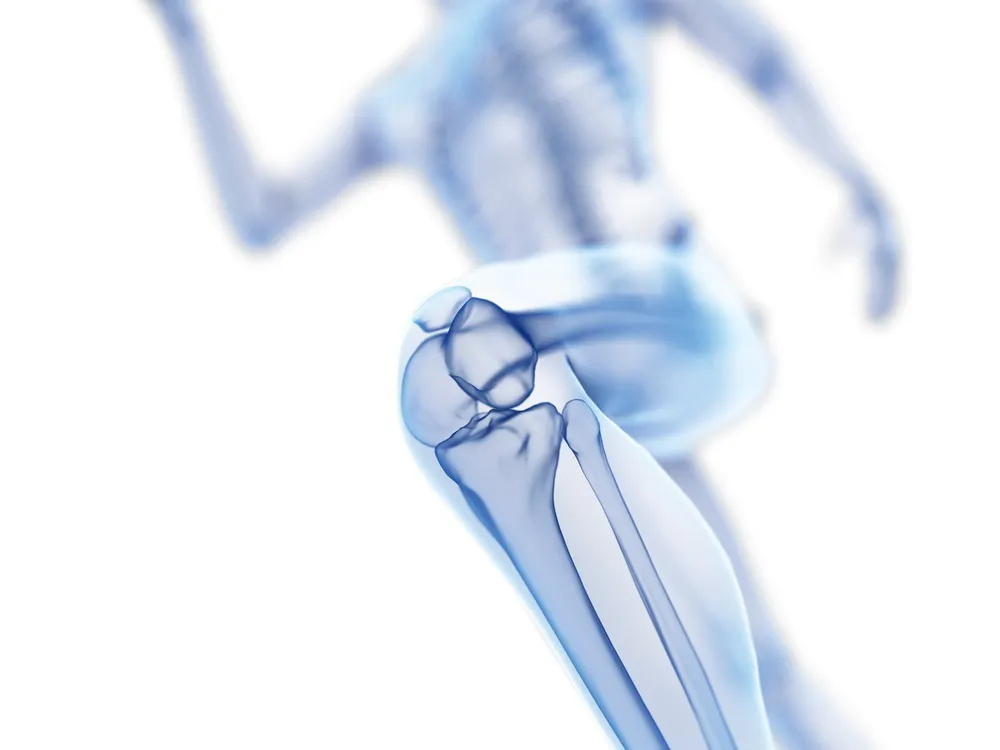
The core principles
of shockwave therapy
1/
For a wide range of musculoskeletal conditions —
stable, effective, and with a very low risk of side effects
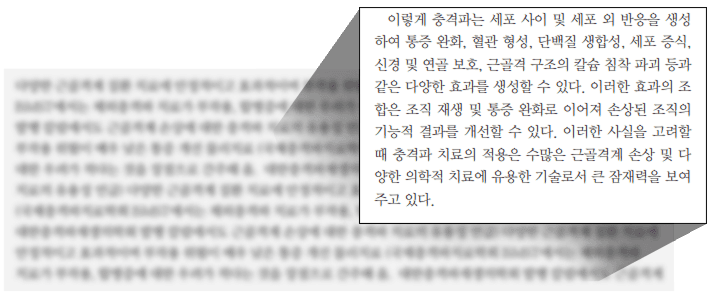
The International Society for Medical Shockwave Treatment (ISMST) has consistently highlighted
few side effects and a low risk of complications as advantages of extracorporeal shock wave therapy.
A column published by the Korean Shockwave Regenerative Medicine Society likewise notes that
shockwave therapy is useful in treating musculoskeletal injuries.
2/
Delivering high-energy shockwaves to the lesion —
a treatment that promotes regeneration and self-healing
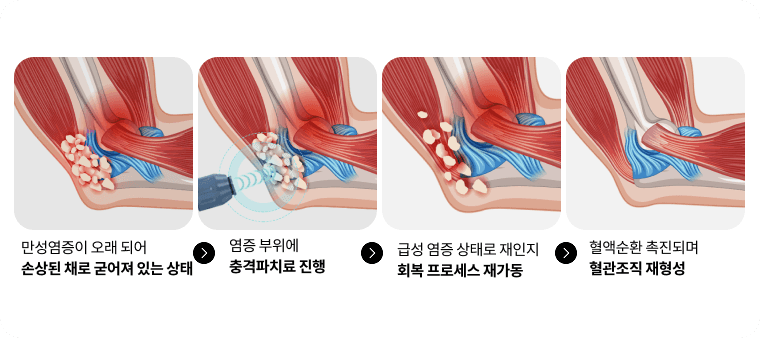
Delivering 1,000–1,500 shockwaves to the injured area
applies fine mechanical stimulation, directly stimulating the lesion behind the pain
and activating the body’s own healing capacity.
It is a technique that restores damage to joints, tendons and ligaments
that had not improved with anti-inflammatory medication, local injections or rehabilitation therapy.
3/
Not medication or injections —
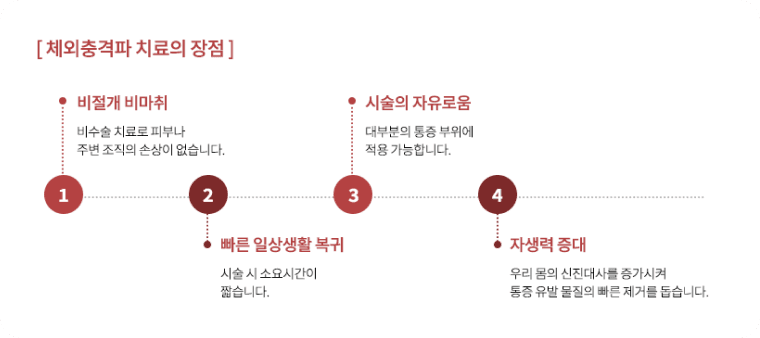
non-surgical, non-incisional, non-invasive
As a non-invasive treatment there is no concern about scarring, and it can be applied to most painful areas —
shoulder, elbow, lower back, neck, knee, ankle.
Treatment is also relatively short at around 20–40 minutes.
You can return to your day straight after treatment and, with almost no recovery period,
repeat sessions are possible.
* Extracorporeal shock wave therapy is carried out after a consultation with a doctor.
Types of shockwave
Radial (divergent) vs focused (concentrated)
Category
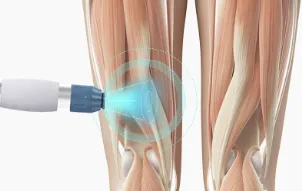
Radial type (Radial)
Focused type (Focused)
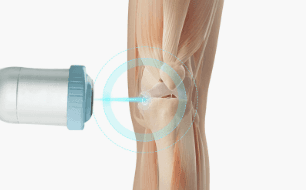
How energy is delivered
Compressed air strikes a pellet, transmitting the impact
Electrical or magnetic energy concentrates acoustic waves on a single point
Energy distribution
Spreads widely across the surface (divergent)
Delivered deeply to a single point (concentrated)
Depth reached
0.5–3 cm (mainly fascia and muscle)
3–6 cm and beyond (mainly tendon, ligament and periosteum)
Stimulus intensity
Gentle and broad
Deep, intense stimulation
Treatment effect
Effective for releasing muscle and fascia
Effective for localised inflammation and wound healing
Indications & treatment areas
Myofascial pain, muscle tension, trigger points, improved blood flow
Chronic tendinitis, calcific tendinitis, ligament injury, tennis elbow, golfer’s elbow, patellar tendinitis
How it feels
A tapping, spreading sensation
A sharp, focused sensation
Shockwave waveform
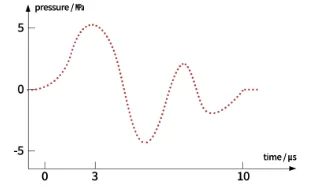
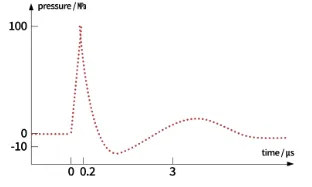
By stage of tissue damage —
the golden time for shockwave therapy
When tissue is damaged, the body sets about repairing itself
through three stages: acute, subacute and chronic.
Through these stages blood flow and metabolic activity rise, and the body’s natural repair response — cell activity, growth factor release — gets under way.
Why shockwave therapy starts from the subacute (second) stage
Shockwave therapy works by applying fine mechanical stimulation that induces micro-damage, so during the
acute stage, when heat, swelling and pain are pronounced, it is not recommended: it can aggravate pain and inflammation.
Applied from the subacute second stage through to the chronic third stage,
shockwave therapy accelerates tissue regeneration and the healing of inflammation.
[ The golden time for shockwave therapy across the stages of rehabilitation ]
The golden time for
shockwave therapy
Stage 1 · Acute (0–3 days)
For 72 hours after injury, inflammatory cells and blood flow increase
Stage 2 · Subacute (3–14 days)
New vessels and fibroblasts form, and tissue regeneration gets under way
Stage 3 · Chronic (2–6 weeks)
The strength and elasticity of the new tissue recover
Treatment cycle guide

Begins in the subacute stage after injury
(once the acute (inflammatory) stage has passed)

Once a week, for a course of
5 or 10 sessions

Repeated maintenance treatment
lowers the recurrence rate

Alternated with
fascial therapy
Who it is recommended for
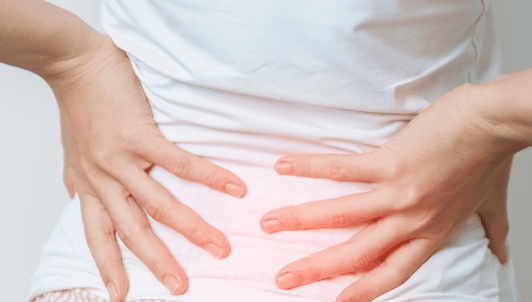
Anyone whose daily life is disrupted by chronic shoulder, neck, lower back, elbow or knee pain
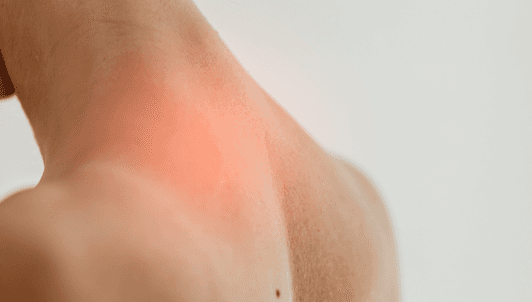
Anyone who wants recovery at its source, without surgery
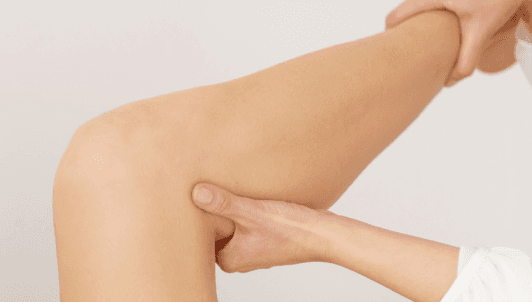
Anyone in rehabilitation who wants to speed up tissue recovery